Best Cars For Family

Best Family Cars continue to be the top choice for Indian households, offering a blend of multi-row seating comfort, expansive luggage space, top-tier safety features, and economical running costs. Whether navigating daily school runs, commuting through urban traffic, or taking long cross-country road trips with multi-generational families, family vehicles deliver practical utility across budget ranges.

Today, the Indian family car market offers diverse body styles, including budget-friendly sub-compact MPVs, feature-packed 5-seater SUVs, versatile 6/7-seater MUVs, and premium high-efficiency hybrids. With stricter safety norms introducing 6 airbags as standard, ISOFIX child seat anchors, and Advanced Driver Assistance Systems (ADAS), buyers can select vehicles that prioritize passenger security alongside modern connectivity and efficiency.

Top Family Cars in India 

Models Price Certified Mileage / Range
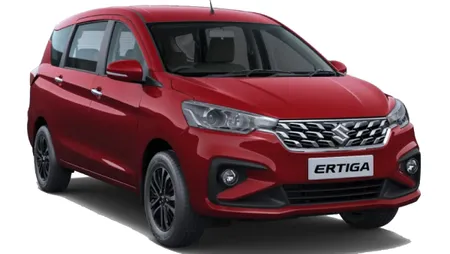
Maruti Suzuki Ertiga ₹10.12 - ₹13.67 Lakh 20.51 km/l (Petrol) / 26.11 km/kg (CNG)
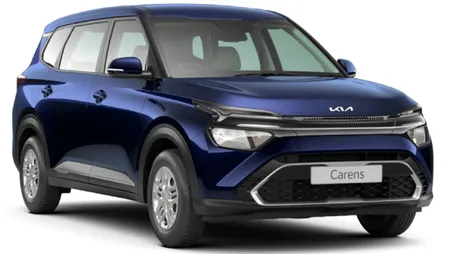
Kia Carens ₹12.84 - ₹12.90 Lakh 15.7 – 21.0 km/l (Petrol/Diesel)
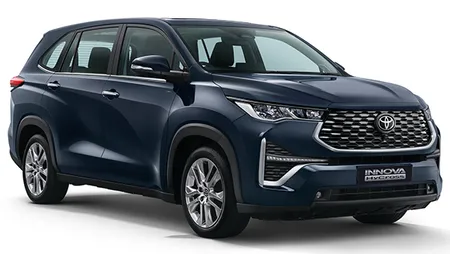
Toyota Innova Hycross ₹23.25 - ₹37.79 Lakh 16.13 - 23.24 km/l (Strong Hybrid)
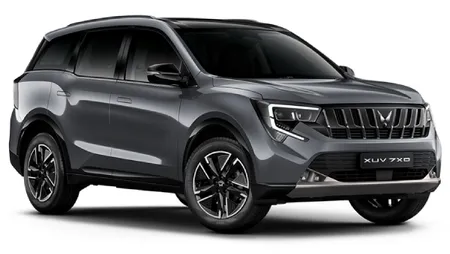
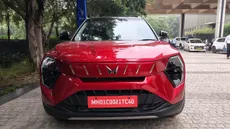
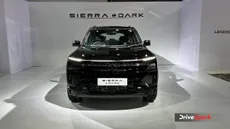
Mahindra XUV 7XO ₹16.51 - ₹27.03 Lakh 13.0 - 17.0 km/l (Petrol/Diesel)
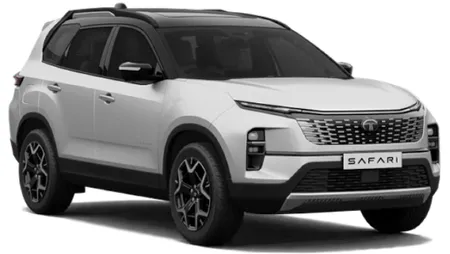
Tata Safari ₹15.56 - ₹28.13 Lakh 14.5 - 16.3 km/l (Diesel)
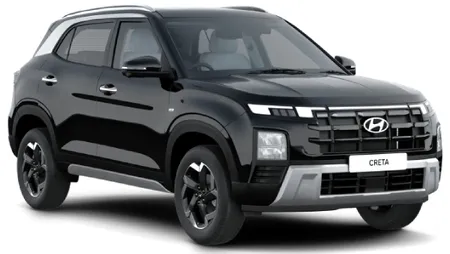
Hyundai Creta ₹12.77 - ₹21.90 Lakh 17.4 - 21.8 km/l (Petrol/Diesel)
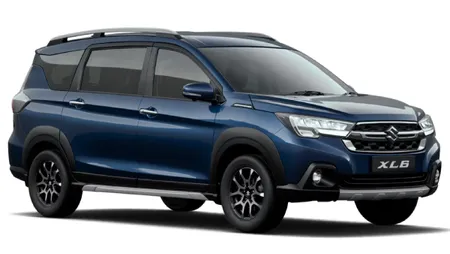
Maruti Suzuki XL6 ₹13.59 - ₹15.26 Lakh 20.97 km/l (Petrol) / 26.32 km/kg (CNG)
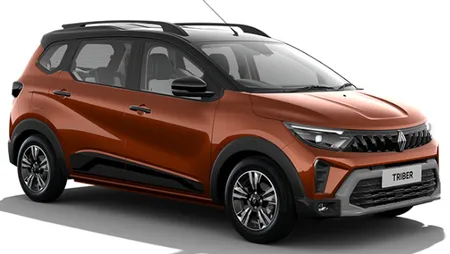
Renault Triber ₹6.55 - ₹9.14 Lakh 18.2 - 20.0 km/l (Petrol)
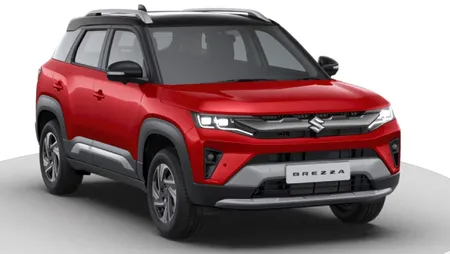
Maruti Suzuki Brezza ₹8.36 - ₹12.99 Lakh 17.38 - 19.80 km/l (Petrol) / 25.51 km/kg (CNG)
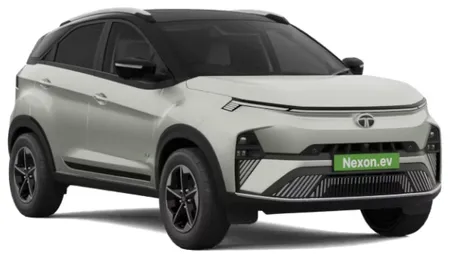
Tata Nexon EV ₹13.33 - ₹18.81 Lakh Up to 489 km (EV Range)

Filter by Car Name

Why Should You Buy a Family Car?

While compact cars and coupes target individual commuters, dedicated family vehicles prioritize multi-passenger utility, safety, and comfort. Here is why investing in a specialized family car makes long-term sense:

  • Spacious Multi-Row Seating: Family cars are engineered to accommodate 5 to 8 passengers comfortably. Models equipped with 2nd-row captain seats or flexible 3rd-row seating ensure parents, children, and elderly family members travel without space constraints.
  • High Passenger Safety Standards: Family-oriented vehicles prioritize passenger protection by incorporating multi-airbag setups, ISOFIX child seat anchors, electronic stability control, and structural crash protection.
  • Versatile Luggage Capacity: Modern family cars utilize modular seating configurations (such as 60:40 split second rows and 50:50 flat-folding third rows) to adjust between carrying maximum passengers or expanding boot space for heavy travel luggage.
  • Low Cost per Kilometer: Fuel options like Strong Hybrids, twin-cylinder CNG systems, and EVs keep fuel bills manageable even during high-mileage road trips and daily carpools.
  • Superior Ride Comfort & Ergonomics: Longer wheelbases, dedicated rear AC vents, sunshade blinds, multiple USB charging ports, and compliant suspension setups keep passengers comfortable over long journeys.
  • Strong Resale Demand: Family vehicles from established brands retain strong value in the pre-owned market due to persistent demand for pre-owned 5-seater and 7-seater vehicles.

Safest Family Cars

Vehicle crashworthiness, structural integrity, and occupant protection remain top priorities for Indian families. Leading automotive bodies like Global NCAP and Bharat NCAP evaluate vehicles rigorously across adult and child occupant protection:

  • Tata Safari & Harrier (5-Star Bharat NCAP & Global NCAP): Built on the high-strength OMEGA-Arc platform, these SUVs hold top crash scores for both adult and child protection, featuring up to 7 airbags, Level 2 ADAS, and ESP with hill descent control.
  • Mahindra XUV 7XO (5-Star Global NCAP): Securing high marks in occupant safety, the XUV 7XO features an ultra-high-strength steel structure, driver knee airbag, ISOFIX child mounts, and active collision avoidance via ADAS.
  • Kia Carens & Hyundai Creta (Standard 6 Airbags & Disc Brakes): Modern family MPVs and SUVs incorporate standard safety equipment across all trim levels, including 6 airbags, ABS with EBD, Electronic Stability Control (ESC), Hill-Start Assist, and 3-point seatbelts for all passengers.
  • Child Passenger Safety (ISOFIX & Rear Locks): Standard ISOFIX anchor points allow secure installation of child seats, while power window lockouts and child-safety door locks keep younger passengers secure during travel.

FAQs on Best Family Cars

Which is the best family car in India?
The "best" family car depends on your budget and seating needs. For 7-seater affordability and low running costs, the Maruti Suzuki Ertiga is a top choice. For feature-packed comfort, the Kia Carens offers high versatility. For long-distance reliability and hybrid efficiency, the Toyota Innova Hycross leads the premium segment, while the Mahindra XUV 7XO offers strong 5/7-seater performance.
Which family car has the best mileage?
The Toyota Innova Hycross Strong Hybrid leads multi-row family cars with a certified fuel efficiency of up to 23.24 km/l. In the budget MPV category, the Maruti Suzuki Ertiga CNG and Maruti XL6 CNG achieve a mileage of up to 26.11 km/kg and 26.32 km/kg respectively.
Which family car is safest?
The Tata Safari, Tata Harrier, and Mahindra XUV 7XO are among the safest family cars in India, carrying top 5-star safety ratings from Global NCAP and Bharat NCAP for both adult and child occupant protection.
Which family car is best for first-time buyers?
The Renault Triber and Maruti Suzuki Brezza are practical choices for first-time family car buyers. They offer manageable exterior dimensions for easy city parking, reliable engine setups, affordable purchase prices, and straightforward maintenance.
Which family car offers automatic transmission?
Most modern family cars offer automatic transmissions. Budget family cars like the Renault Triber use AMT systems, while models like the Maruti Ertiga, Brezza, and Kia Carens offer 6-speed torque-converter automatics. The Hyundai Creta and Kia Carens also provide DCT options, while the Toyota Innova Hycross uses an e-CVT automatic system.
Which is the cheapest family car?
The Renault Triber is the most affordable 7-seater family car in India, with prices starting at approximately ₹6.00 Lakh (ex-showroom). In the 5-seater crossover/SUV category, options like the Nissan Magnite and Renault Kiger serve as budget-friendly alternatives starting around ₹6.00 Lakh.
Which family car has the largest boot / seating capacity?
For absolute seating capacity, the Toyota Innova Hycross accommodates up to 8 passengers comfortably. For maximum luggage volume, the Renault Triber offers 625 Litres of boot space when the 3rd-row seats are removed, while the Kia Carens and Mahindra XUV 7XO provide expansive load capacities with flat-folded rear seats.
Petrol, Diesel, or CNG family car?

Choose Petrol if your monthly driving is under 1,000 km and you desire smooth, quiet engine refinement.

Choose CNG if you commute long distances daily and wish to keep running costs low without moving to an EV.

Choose Diesel if you carry heavy passenger loads frequently and require high low-end pulling torque for highway cruising.

Is an EV family car worth buying?
Yes, electric family vehicles like the Tata Nexon EV or Tata Punch EV are worth considering if you primarily drive within urban areas or have access to home charging. EV family cars provide quiet operation, zero tailpipe emissions, and running costs as low as ₹1–₹1.5 per kilometer.
Which family car has the best resale value?
Toyota Innova models (Innova Crysta and Hycross) and Maruti Suzuki family vehicles (Ertiga and Brezza) hold the highest resale values in the Indian pre-owned market. Their reputation for mechanical reliability, engine durability, and affordable spare parts ensures strong pre-owned buyer demand.
Notifications
Settings
Clear Notifications
Notifications
Use the toggle to switch on notifications
  • Block for 8 hours
  • Block for 12 hours
  • Block for 24 hours
  • Don't block
Gender
Select your Gender
  • Male
  • Female
  • Others
Age
Select your Age Range
  • Under 18
  • 18 to 25
  • 26 to 35
  • 36 to 45
  • 45 to 55
  • 55+