NEW ELECTRIC CARS IN INDIA - EV CARS 2026

Electric mobility in India is growing rapidly, offering everyday drivers zero-tailpipe emissions, ultra-low running costs, and instantaneous throttle response. Whether you are looking for an affordable entry-level urban commuter, a feature-loaded compact crossover, or a high-performance long-range SUV, the Indian electric vehicle market offers a wide variety of choices across every budget.

Modern electric vehicles (EVs) feature advanced lithium-ion and LFP battery packs ranging from 17kWh to over 100kWh, delivering certified driving ranges from 200km to more than 600km on a single charge. With running costs averaging just ₹0.80 to ₹1.50 per kilometer—compared to ₹5.50–₹7.00 per km for conventional petrol and diesel cars—EVs deliver substantial long-term savings along with lower routine maintenance and two-pedal automatic driving ease.

On DriveSpark, you can easily explore and compare all new electric cars available in India. Access updated ex-showroom prices, estimated city-wise on-road costs, certified MIDC/ARAI driving range figures, battery warranties, public DC fast-charging speeds, and flexible ownership options like Battery-as-a-Service (BaaS) across top manufacturers including Tata Motors, MG Motor, Mahindra, Maruti Suzuki, Hyundai, Kia, BYD, BMW, and Mercedes-Benz.

Car Model On-Road Price Body Type
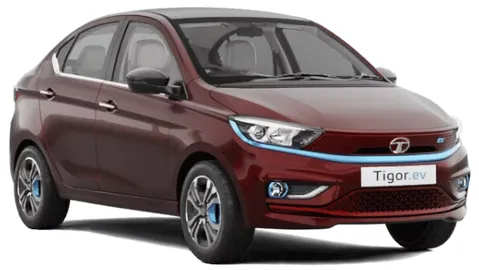
Tata Tigor EV Rs. 13.08 - 14.38 Lakh Sedan
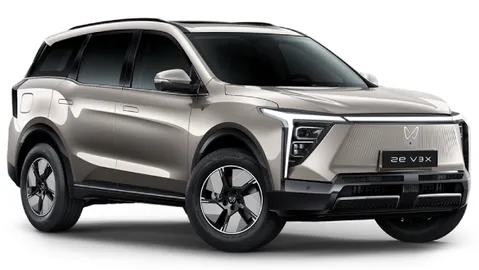
Mahindra XEV 9S Rs. 13.49 - 36.06 Lakh SUV
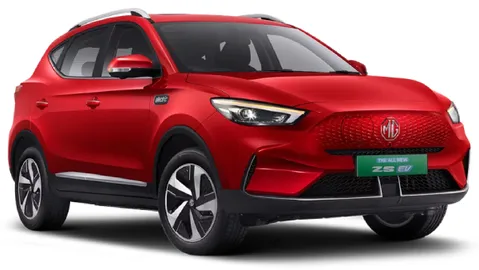
MG ZS EV Rs. 13.86 - 16.52 Lakh SUV
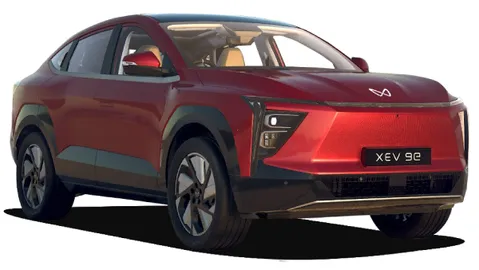
Mahindra XEV 9e Rs. 14.80 - 35.92 Lakh SUV
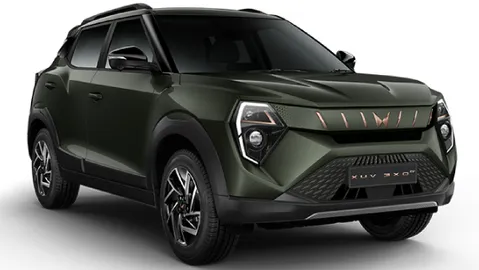
Mahindra XUV 3XO EV Rs. 14.98 - 16.47 Lakh SUV

Filter by Car Name

Best Electric Cars in India by Segment

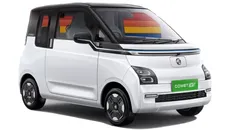
  • Budget Electric Hatchbacks (Under ₹10 Lakh): Models like the MG Comet EV, Tata Tiago EV, and Citroen eC3 offer efficient urban commuting, low electricity consumption, and simple home charging setups.
  • Electric Crossovers & Compact SUVs (₹10 Lakh to ₹20 Lakh): The most popular EV category in India, featuring bestsellers such as the Tata Punch EV, MG Windsor EV, Tata Nexon EV, Maruti Suzuki e Vitara, and Tata Curvv EV. These models combine practical ground clearance, multi-mode regenerative braking, and real-world ranges of 280kmto420km.
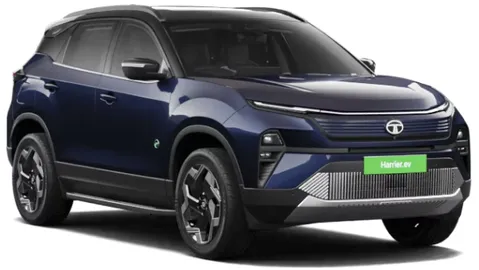
  • Premium & Born-EV SUVs (₹20 Lakh to ₹45 Lakh): High-spec electric SUVs including the Mahindra XEV 9e, Mahindra BE 6e, Tata Harrier EV, Hyundai Creta EV, and BYD Seal, delivering high power output (200+hp), large battery packs (60to79kWh), and rapid DC charging capability.
  • Luxury Electric Vehicles (Above ₹45 Lakh): Flagship models like the Kia EV6, BMW i4 / i7, Mercedes-Benz EQS, and Audi e-tron, featuring 800V charging architectures, air suspension, and whisper-quiet cabin refinement.

EV Charging 101: Home AC Chargers vs. Public DC Fast Chargers

Understanding EV charging modes makes daily electric driving simple and convenient:

  • Home AC Wallbox (3.3 kW / 7.2 kW): Installed at your home or office parking spot. Full charging generally takes 4 to 10 hours overnight.
  • Public DC Fast Charging (30 kW to 150+ kW): Located along major highways and metro networks, DC fast chargers replenish battery levels from 10% to 80% in 30 to 50 minutes during long-distance trips.
  • Portable 15A Sockets: Included with every EV, these plug into standard 15A household three-pin wall outlets for flexible emergency charging.

Financial Advantages: Running Costs, Maintenance & BaaS Options

  1. Lower Fuel Expenses: Charging an EV costs approximately ₹120 to ₹250 for a full battery, reducing monthly running expenses by up to 75–80% compared to petrol or diesel vehicles.
  2. Reduced Maintenance Requirements: Without engine oil, spark plugs, timing belts, or exhaust systems, routine service costs for EVs are significantly lower over a 5 to 8-year ownership period.
  3. Battery-as-a-Service (BaaS) Options: Select manufacturers offer BaaS programs, allowing buyers to purchase the vehicle body at a lower upfront price and pay for battery usage through a per-kilometer rental scheme.
  4. State Subsidies & Tax Exemptions: Many Indian states provide full road tax and registration fee waivers on battery electric vehicles, reducing final on-road costs.

Key Factors to Check Before Buying an EV

  • Real-World Range vs. Certified ARAI Range: Heavy traffic, high-speed highway driving, and air conditioning usage affect efficiency. Expect real-world driving range to average roughly 70–85% of official claimed figures.
  • Battery Chemistry & Warranty: Look for advanced LFP or NMC battery packs backed by standard 8-year or 1,600,000 km battery & motor warranties.
  • Charging Station Availability: Check public charging network coverage along your regular daily routes and weekend road trip corridors using dedicated charging apps.

Frequently Asked Questions (FAQs)

1. Which is the best electric car in India in 2026?
The Tata Punch EV and MG Windsor EV are segment leaders for overall value, offering spacious interiors, modern technology, and practical range. For long-distance driving and premium performance, the Mahindra XEV 9e, Tata Nexon EV, and Maruti Suzuki e Vitara are top picks.
2. How much does it cost to charge an electric car at home in India?
Charging a standard 20kWh to 40kWh EV battery at home using normal domestic electricity rates (₹6 to ₹8 per unit) costs approximately ₹120 to ₹280 for a full charge, which provides 180 km to 320 km of real-world driving.
3. What is the typical battery lifespan and warranty on an electric car?
Modern EV batteries are engineered to last 10 to 12 years. Leading automakers in India offer an 8-year or 1,600,000 km warranty on the lithium-ion battery pack and electric drive motor, guaranteeing at least 70–80% battery health retention over the warranty period.
4. What is the difference between real-world range and certified ARAI range?
Certified ARAI/MIDC range is measured under controlled lab conditions. Real-world range reflects actual driving conditions—including ambient temperature, air conditioning use, driver acceleration, and ambient road elevation. Real-world range typically ranges between 70% and 85% of the certified figure.
5. How does Battery-as-a-Service (BaaS) work when buying an EV?
BaaS separates the cost of the vehicle from the battery pack. You pay a lower initial ex-showroom price for the vehicle and pay a battery rental fee based on kilometers driven (e.g., ₹3.50 to ₹4.50 per km), reducing upfront purchase costs for budget-conscious buyers.
Notifications
Settings
Clear Notifications
Notifications
Use the toggle to switch on notifications
  • Block for 8 hours
  • Block for 12 hours
  • Block for 24 hours
  • Don't block
Gender
Select your Gender
  • Male
  • Female
  • Others
Age
Select your Age Range
  • Under 18
  • 18 to 25
  • 26 to 35
  • 36 to 45
  • 45 to 55
  • 55+